 Reviews



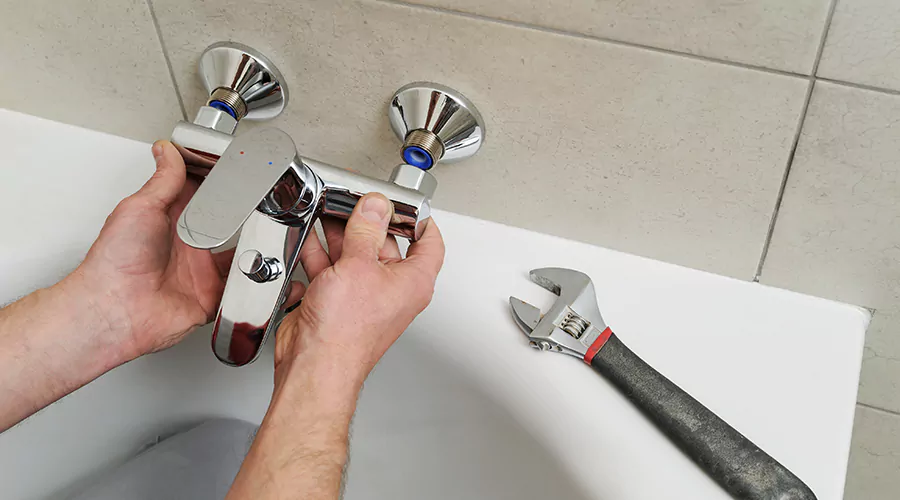
A tub faucet usually leaks because a washer, O-ring, or cartridge can no longer seal the valve completely. Professional bathtub faucet repair costs about $60 to $400 in 2026, while common replacement parts can cost only a few dollars to about $100. Bathtub faucet replacement may be the better solution when the existing faucet is worn, damaged, or no longer seals properly.
The supplied keywords tub faucet leaking and bathtub faucet leaking each have 50,000 average monthly searches.
The location of the water gives you the first clue.
A drip from the spout points toward the shutoff components inside the valve.
Water around the handle suggests another seal location.
What Usually Causes a Tub Faucet to Leak?
A worn washer or cartridge is one of the most common causes of a dripping tub spout. O-rings can also deteriorate. Valve seats can become damaged or coated with mineral deposits. Each failure prevents the valve from creating a complete water seal.
- Two-handle faucets can use stems with seats and springs.
- Single-handle tub valves often use cartridges.
- Roman tub fixtures can use different cartridge designs.
- The correct replacement part depends on the exact faucet model.
That is why identifying the valve matters before buying components.
How Does a Tub Faucet Leak Progress?
A faucet leak often starts as an occasional drip after the handle is closed. The drip becomes more frequent as the sealing part wears further. A failed valve body can eventually require a larger repair.
| Leak Stage | What You Notice | Likely Repair | 2026 Cost |
|---|---|---|---|
| Early | Occasional drip | Washer or O-ring | $1 to $10 parts |
| Repeating | Constant slow drip | Cartridge or stem | $10 to $100 parts |
| Heavy | Steady trickle | Internal valve repair | $60 to $400 professional |
| Valve failure | Leak cannot be stopped | Valve replacement | Can cost more |
Professional leaky faucet repair costs $100 to $400 across faucet types. Bathtub faucet repairs can range from about $60 to $400 depending on the failed component.
A full new bathtub faucet installation can cost $450 to $1,000 when the project goes beyond simple internal repair.
Repairing the sealing part early can therefore prevent a much larger project.
What Are the Warning Signs of a Failing Tub Faucet?
A faucet often changes before it develops a steady leak. Pay attention to handle feel and water behavior after the valve is closed.
- The spout keeps dripping after shutoff. The internal seal is not closing fully.
- The drip becomes faster over time. Wear is progressing.
- The handle feels unusually stiff. Mineral buildup can affect internal movement.
- Water appears around the handle. A stem seal or O-ring may be leaking.
- The handle must be overtightened to stop water. A washer or seat may be worn.
- The water temperature becomes harder to control. Cartridge movement may be affected.
- The faucet makes grinding sounds. Internal components may be worn.
- Mineral residue appears around the spout. Repeated dripping is leaving deposits.
- The faucet leaks again after a minor adjustment. The sealing component may need replacement.
- Water appears behind the trim plate. The leak may extend beyond the visible spout.
A drip at the spout and moisture behind the wall are not the same problem.
Hidden water requires quicker attention.
How Do You Identify the Faucet Type?
Identify the faucet before disassembly because repair parts are not universal.
- A two-handle faucet controls hot and cold water separately.
- A single-handle valve uses one control for flow and temperature.
- A Roman tub faucet is usually mounted on the tub deck.
- Look for a brand name on the trim.
- Photograph the faucet before removing parts.
- Check the model information when available.
Manufacturers provide different replacement cartridges for different valve families. Official product documentation shows that even one brand can use several tub and shower cartridge designs.
Buying the wrong cartridge wastes time and can damage the assembly during forced installation.
How Can You Tell Which Side is Leaking on a Two-Handle Faucet?
A two-handle faucet can sometimes be diagnosed by shutting off one water supply at a time. If the drip stops when the hot side is isolated, the hot valve is the likely source.
- Turn off the hot supply if separate access is available.
- Check the spout.
- If the drip continues, restore the hot supply.
- Then isolate the cold side.
Manufacturer troubleshooting for two-handle tub valves uses this approach before replacing seats or stem components.
If individual supplies cannot be isolated safely, shut off the house water before disassembly.
Do not remove a pressurized valve stem.
Can a Worn Washer Cause the Leak?
Yes. Compression-style faucets use rubber washers that press against a valve seat. Repeated opening and closing gradually wears the washer. Mineral deposits can accelerate seal deterioration.
- A worn washer may show a flattened edge.
- The rubber can become cracked.
- The washer can harden.
- A damaged valve seat can also cut a new washer.
Replacing the washer without checking the seat can therefore lead to another leak.
Rubber washers cost only a few dollars in 2026.
This is one of the lowest-cost faucet repairs when the surrounding parts remain in good condition.
Can a Cartridge Cause the Tub Spout to Drip?
Yes. Many single-handle tub faucets use a cartridge that controls water flow. Internal seals inside the cartridge wear over time. Mineral deposits can also interfere with cartridge movement.
- A cartridge can cause a constant drip.
- It can also affect temperature control.
- Some cartridges become difficult to turn.
Replacement cartridges commonly cost $10 to $100 before labor.
Official manufacturer repair guidance requires shutting off the water before cartridge removal.
The replacement must match the exact valve design.
Do not assume a cartridge that looks similar will fit correctly.
Can Hard Water Make a Tub Faucet Leak?
Mineral deposits can affect moving valve components and sealing surfaces. Deposits can collect on pressure-balance parts or around cartridge surfaces. This buildup can interfere with smooth movement and increase wear. Faucet installation can provide a properly fitted replacement when mineral buildup or wear affects the performance of an existing faucet.
Official valve-maintenance guidance identifies mineral buildup as a cause of pressure-balance component problems.
- Look for white mineral residue.
- Check whether the handle has become harder to turn.
- Do not scrape precision valve surfaces with aggressive tools.
Manufacturer-approved cleaning methods are safer than improvised abrasives.
A new sealing part will last longer when the valve body is clean.
What Safe DIY Test Can You Do First?
The simplest diagnostic test is to observe exactly where the water appears after the faucet is shut off.
- Dry the spout.
- Dry the handles.
- Turn the faucet on.
- Let water run briefly.
- Close the valve normally.
- Do not overtighten the handle.
- Watch the spout for several minutes.
- Then check around the handles.
A spout drip points toward an internal shutoff problem.
Moisture around the handle points toward a seal closer to the stem.
Water behind the wall or trim plate needs a different level of inspection.
How Do You Replace a Simple Faucet Cartridge?
Cartridge replacement varies by manufacturer but the general sequence begins with shutting off the water supply. Remove the handle and trim only after pressure has been relieved.
- Confirm the correct replacement part first.
- Shut off the water.
- Open the faucet to relieve pressure.
- Remove the handle.
- Remove retaining hardware.
- Pull the old cartridge according to the manufacturer instructions.
- Clean the valve body.
- Install the matching cartridge.
- Reassemble the trim.
- Restore water slowly.
- Test for leaks.
Manufacturer documentation often recommends cleaning and flushing the valve body before the new cartridge is installed.
Do not improvise the cartridge orientation.
Some valves depend on correct alignment for temperature control.
When Should You Call a Professional?
Professional help makes sense when the valve body itself is leaking or the faucet cannot be isolated safely. Water behind the wall also deserves quicker attention because hidden moisture can damage drywall and surrounding materials.
Bathtub faucet repair can cost about $60 to $400 in 2026. Broader bathroom leak repairs range from about $150 to $600 when access or hidden plumbing becomes involved.
Professional diagnosis is reasonable when:
- Water appears behind the wall.
- The valve body is cracked.
- A replacement cartridge does not stop the leak.
- Internal parts are heavily corroded.
- The water cannot be shut off safely.
- The faucet needs complete replacement.
A bathtub faucet replacement is a larger project than changing a washer or cartridge.
A new bathtub faucet installation can cost $450 to $1,000 in 2026 depending on the fixture and plumbing access.
How Can You Prevent Another Tub Faucet Leak?
Avoid forcing the handle tighter when a faucet starts dripping. Extra pressure can increase wear without repairing the damaged seal.
- Close the faucet with normal pressure.
- Remove mineral deposits from exterior surfaces.
- Respond to a new drip early.
- Use manufacturer-matched repair parts.
- Check handles for stiffness.
- Inspect the trim for hidden moisture.
A repair part can cost only a few dollars while a full valve project can cost hundreds.
Early diagnosis therefore has a clear cost advantage.
Conclusion
If your tub faucet is leaking, identify where the water appears before buying parts. A drip from the spout often points toward a washer or cartridge that no longer seals. Water around the handle can involve another internal seal. Turn off the water before disassembly and match every replacement part to the valve model. If water is leaking behind the wall or the valve body has failed, professional repair can prevent hidden damage.
Frequently Asked Questions
Why does my tub faucet drip after I turn it off?
The internal valve is not sealing completely. A worn washer or cartridge is a common cause.
Can I fix a leaking tub faucet without replacing the whole faucet?
Yes. Many leaks are repaired by replacing an internal washer or cartridge rather than the complete fixture.
Why does the faucet stop dripping when I tighten the handle hard?
Extra pressure can temporarily compress a worn washer. The sealing component still needs attention.
How much does a bathtub faucet cartridge cost?
Cartridges commonly cost about $10 to $100 in 2026 before labor.
When should I replace instead of repair the tub faucet?
Replacement becomes more reasonable when the valve body is cracked or badly corroded. Repeated failed repairs are another sign to evaluate replacement.